
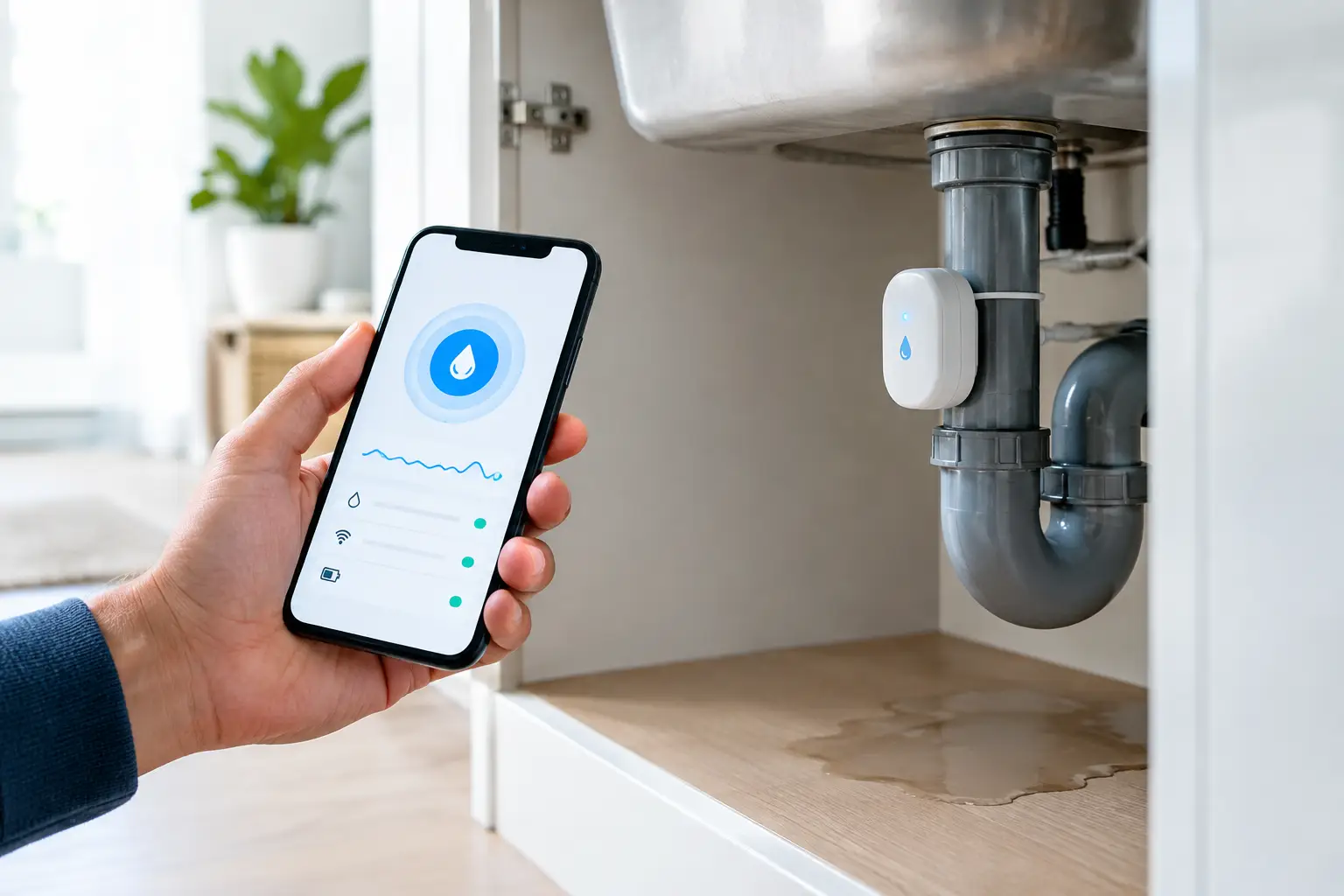
A leaking toilet supply line can release enough water to damage flooring, trim, and the ceiling below it before anyone notices a puddle. Smart leak detection gives homeowners an earlier warning – and, with the right setup, can shut off the water before a small failure becomes an expensive restoration project.
For homes in Northwest Connecticut, that added protection can be especially valuable. Older supply piping, vacant homes, finished basements, private wells, water heaters, and seasonal temperature swings all create opportunities for leaks to go unnoticed. A smart device does not replace professional plumbing care, but it can give you time to act before water takes over your home.
What smart leak detection actually does
Smart leak detection is a group of connected devices designed to identify unwanted water or unusual water use. Most systems send an alert to your phone through an app. Some are simple battery-powered sensors placed where leaks are likely. Others monitor water flow through your main water line and can automatically close a shutoff valve when they detect a major problem.
The right choice depends on what you want the system to protect. A sensor near a water heater can alert you when water reaches the floor. A whole-home monitor may recognize continuous flow from a burst pipe, hidden toilet leak, or failed appliance hose even when you are not home.
That distinction matters. A floor sensor reacts when water is already present. A flow-monitoring system may identify a problem sooner, but it needs professional installation and may require compatible piping, reliable Wi-Fi, and an accessible main shutoff location.
Where leaks start in a typical home
Major pipe breaks get attention because they are dramatic. More often, water damage starts with a slower problem behind a wall, below a fixture, or inside a utility room. These are some of the locations homeowners should watch most closely:
- Water heater connections, temperature-and-pressure relief valves, and drain pans
- Washing machine hoses, refrigerator water lines, and dishwasher connections
- Toilet supply lines, fill valves, and wax rings
- Under-sink drain fittings and kitchen or bathroom faucet connections
- Sump pump discharge piping, water treatment equipment, and well tank connections
- Pipes in unheated basements, crawl spaces, garages, and exterior walls
Smart sensors work well in areas where a leak will reach the floor. Place them beside, not directly under, appliances and equipment so they can be serviced without disturbing the device. Low-profile sensors are useful under bathroom vanities, behind toilets, beside washing machines, and near water heaters.
A hidden leak does not always create a wet floor. A slow drip inside a wall may show up first as a musty odor, peeling paint, a soft area of drywall, or an unexpected increase in your water bill. Whole-home flow monitoring can be useful for these situations, especially if your home is empty during the day or for extended periods.
Smart leak detection is not a set-it-and-forget-it solution
A connected water alarm can reduce risk, but it cannot diagnose every plumbing problem accurately or prevent every kind of water damage. Sensors need working batteries, a dependable wireless connection, and periodic testing. If your phone notifications are silenced, an alert may still go unseen.
Automatic shutoff systems also need thoughtful setup. They can protect a home during a significant leak, yet they may occasionally flag normal water use as unusual. Irrigation systems, whole-house humidifiers, water softener regeneration cycles, long showers, and certain well-system conditions can affect how a monitor interprets flow. The device should be configured around your household’s normal patterns rather than treated as a plug-and-play answer.
There is another practical consideration: shutting off the main water supply stops water to the home. That is usually the right response to an active leak, but it may leave a family without water until the issue is corrected. Homeowners should know where the manual shutoff is, understand how their smart valve operates, and have a plan for emergency service.
Choosing between leak sensors and automatic shutoff valves
For many homeowners, a few well-placed sensors are the simplest starting point. They are typically affordable, easy to add near high-risk equipment, and effective at catching leaks from water heaters, washing machines, toilets, and sinks. They are a sensible choice if you mainly want an early warning while you are home or nearby.
A monitored shutoff valve is a stronger option for a second home, a property that sits vacant during travel, or a home with a history of plumbing leaks. It can also make sense after a major renovation, when new flooring or finished lower levels need added protection. Because these systems connect to your main water supply, installation should be handled carefully by a qualified plumbing professional.
A whole-home system is not automatically better for every house. If the main line is difficult to access, the plumbing layout is complex, or the home has unreliable internet service, individual sensors may offer more dependable protection for the investment. An experienced technician can inspect your setup, explain what is practical, and provide straightforward pricing before work begins.
Pair the technology with basic plumbing prevention
The best results come from combining smart alerts with regular maintenance. Check appliance hoses for cracking, corrosion, or bulging, and replace aging rubber hoses with quality braided lines where appropriate. Look beneath sinks and around toilets every few months, particularly in guest bathrooms that are not used often.
Water heaters deserve regular attention. Moisture around the base, rust on fittings, a dripping relief valve, or an aging tank can signal trouble before a complete failure. If your water heater is approaching the end of its expected service life, planning a replacement is far less stressful than responding to a flooded utility room.
Homeowners with private wells should also watch their pressure tanks, treatment systems, and nearby piping. Repeated pump cycling, unexplained pressure changes, or dampness around equipment can point to a leak or system issue that needs professional diagnosis. In homes with sump pumps, test the pump before heavy rain and confirm the discharge line is directing water away from the foundation.
During freezing weather, keep vulnerable areas adequately heated and protect exposed pipes where needed. A smart device may alert you to the result of a frozen pipe, but insulation, heat, and timely repairs are what help prevent that pipe from splitting in the first place.
What to do when you receive a leak alert
Treat every alert as worth checking, even if the device later turns out to be triggered by condensation or a minor spill. Start by looking at the area identified by the sensor. If water is actively flowing, turn off the fixture shutoff valve if you can safely reach it. For a larger leak, shut off the home’s main water supply.
Do not use electrical equipment near standing water. If water is close to an outlet, appliance, panel, or extension cord, avoid the area and contact a professional promptly. Move rugs, towels, and belongings only when it is safe to do so, then begin drying affected surfaces quickly to limit damage and mold growth.
If a flow monitor reports continuous use but you cannot find the source, stop running water fixtures and check your water meter if accessible. A meter that continues moving can indicate a hidden leak. Toilets are common culprits, but a concealed pipe leak requires professional testing and repair rather than guesswork.
Professional help still matters
Smart devices are excellent at telling you that something may be wrong. They cannot replace the hands-on work of locating a failed fitting, repairing a burst pipe, replacing a leaking water heater, or finding a concealed line problem without causing unnecessary damage. The fastest path back to normal is a clear diagnosis and a repair that addresses the cause, not just the visible water.
Escape Plumbing & Heating helps homeowners throughout the area respond to leaks with prompt service, skilled diagnosis, and straightforward upfront pricing. If an alert points to a leak, a water bill suddenly climbs, or you see moisture where it should not be, acting early can protect far more than your plumbing. It can protect the rooms, belongings, and peace of mind that make your house home.