A sewer problem rarely announces itself with one obvious event. More often, it starts with a toilet that bubbles after a shower, a tub that drains slowly, or an odor you cannot quite place. Prompt sewer repair matters because the line beneath your home carries wastewater away from every drain. When that line is blocked, damaged, or failing, a minor inconvenience can become a messy and expensive disruption fast.
For homeowners in Northwest Connecticut, the right response is not to guess at the cause or keep reaching for drain cleaner. A professional diagnosis can identify whether the issue is inside a branch drain, in the main sewer line, or outside where the pipe connects to the septic system or public sewer. That distinction affects both the repair and the cost.
Signs You May Need Sewer Repair
One slow drain by itself may be a local clog near that fixture. When several drains act up at the same time, however, the main sewer line becomes a much more likely concern. Pay attention to patterns, especially if they repeat after a temporary fix.
Gurgling is another warning sign. If flushing a toilet causes the shower drain to bubble, or running the washing machine makes a nearby sink gurgle, wastewater and air may be struggling to move through a restricted line. Water that backs up into a lower-level tub, shower, or floor drain is more urgent. Those fixtures are often the first place wastewater appears when the main line cannot carry it away.
Sewage odors indoors or around the yard deserve attention as well. A persistent smell can point to a blockage, cracked pipe, dry trap, or venting issue. Outside, unusually lush patches of grass, soft ground, standing water, or a sinkhole-like depression near the sewer route can indicate a leak below the surface.
Do not overlook frequent clogs. If you are calling for drain clearing repeatedly, the visible clog may be a symptom rather than the actual problem. Grease buildup, root intrusion, a shifted pipe, or a damaged section of line can keep catching waste until the underlying issue is corrected.
What Causes a Main Sewer Line to Fail?
Sewer lines work out of sight, but they are exposed to years of use, ground movement, moisture, and changing temperatures. In older homes throughout Litchfield County, pipe material and age can be major factors. Clay, cast iron, Orangeburg, and aging metal piping may crack, corrode, sag, or deteriorate over time.
Tree roots are a common cause of trouble. Roots naturally seek moisture and can work their way into small joints or cracks in a sewer pipe. Once inside, they grow and catch paper and waste, gradually forming a stubborn blockage. Cutting roots can restore flow in some cases, but if the pipe has open joints or structural damage, roots are likely to return until the line is properly repaired.
Not every sewer issue is caused by age or roots. Grease, wipes labeled as flushable, paper towels, hygiene products, and other household items can build up in the line. Heavy ground settlement can create a low spot, often called a belly, where waste and water collect rather than flowing freely. A broken, offset, or collapsed pipe requires a different solution than a simple blockage.
Why a Camera Inspection Comes First
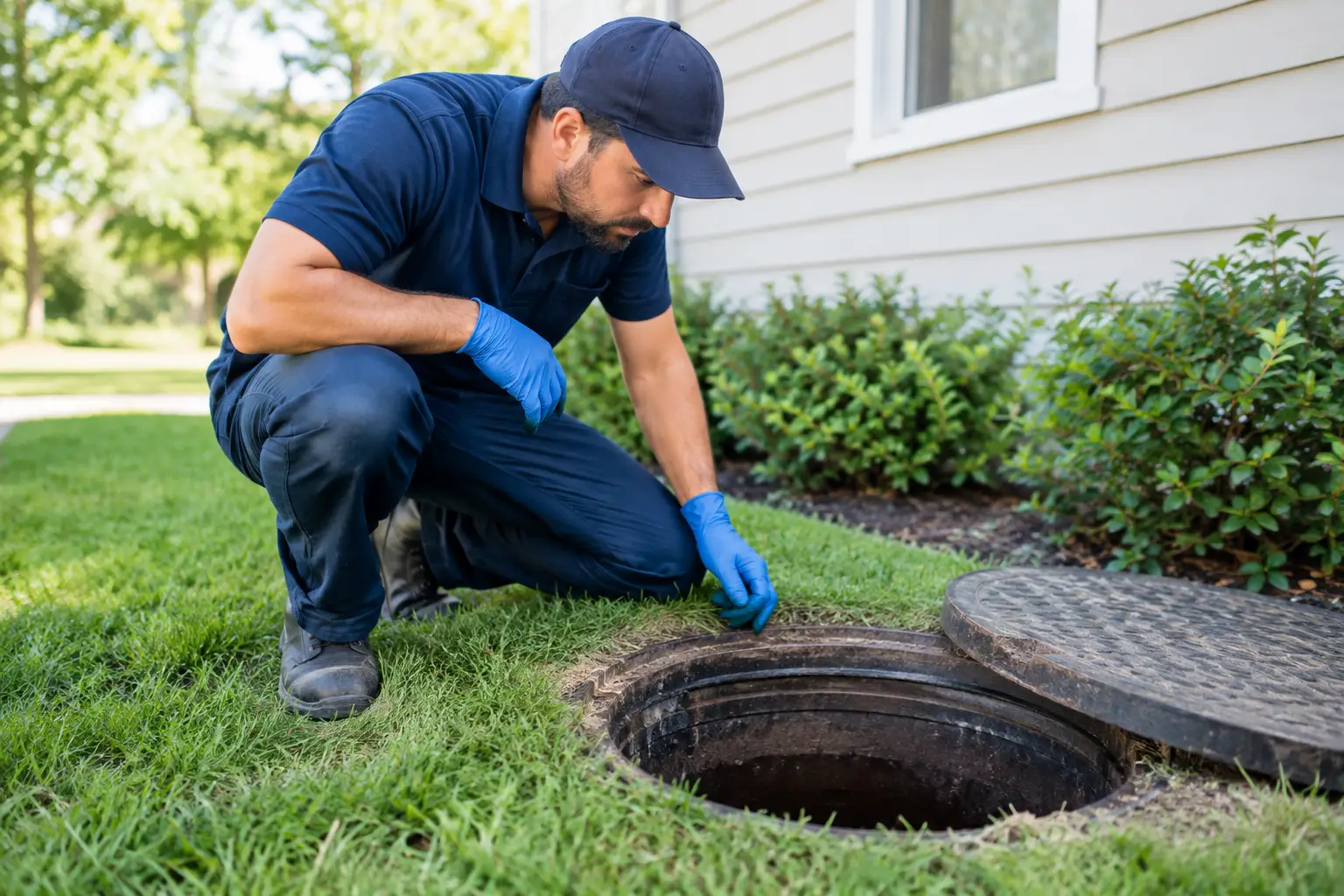
Digging based on a guess is not a good plan. Sewer video inspection lets a trained technician see inside the line and locate the trouble with far greater accuracy. A camera can reveal roots, buildup, cracks, corrosion, separated joints, standing water, and collapsed sections of pipe.
This step is valuable because it separates cleaning needs from repair needs. If the line is structurally sound but clogged, professional drain clearing may restore normal flow. If the camera shows a cracked or sagging pipe, clearing the blockage alone may only provide short-term relief.
A proper inspection also helps determine where the issue is located. Homeowners are often responsible for the sewer lateral running from the home to the public connection, while responsibilities can differ for municipal piping beyond that point. For homes with septic systems, the drain line and tank connection need to be evaluated in the context of the full wastewater system.
Sewer Repair Options Depend on the Damage
There is no single repair that fits every sewer line. The right recommendation should be based on the camera findings, pipe material, access, depth, and condition of the surrounding line.
Drain Cleaning for Removable Blockages
When the pipe is intact and the obstruction is caused by buildup or roots, professional cleaning may be the appropriate first step. Specialized equipment clears the line more effectively than a plunger or store-bought chemical product. Chemical cleaners can be harsh on older pipes and usually cannot solve roots, pipe breaks, or a collapsed section.
Cleaning is often less disruptive and less costly than replacement, but it is not a structural repair. If roots return quickly or backups continue, it is time to investigate the pipe condition more closely.
Targeted Pipe Repair
A localized repair may make sense when the problem is limited to one accessible section. For example, a single broken joint, root-damaged connection, or short collapsed area may not require replacing the entire line. This approach can preserve sound portions of the existing pipe while correcting the point of failure.
The trade-off is that an older line can have more than one weak area. If the camera shows widespread corrosion, cracking, or multiple offsets, a spot repair may delay rather than prevent another problem.
Sewer Line Replacement
Replacement is generally recommended when a line has extensive deterioration, repeated failures, severe bellies, or a collapse. Although it is a larger project, replacing a failing sewer line can eliminate the cycle of repeated backups and emergency calls.
The installation method depends on the property. Traditional excavation may be necessary when access is straightforward or when the pipe condition calls for it. In some situations, less invasive methods may be possible. A qualified plumber should explain the condition of the line, the available options, what work will affect your yard or driveway, and the upfront price before work begins.
What to Do When Sewage Backs Up
A sewage backup is a health and property-damage concern. Stop using water immediately. Do not flush toilets, run the dishwasher, start laundry, or take showers, because every gallon sent down a drain can worsen the backup.
Keep children and pets away from the affected area. Wastewater can contain harmful bacteria, and porous items such as carpet, cardboard, and upholstered furniture may need professional evaluation or disposal if contaminated. If the backup is near electrical outlets or appliances, avoid touching standing water and use caution around the area.
Then arrange professional service as soon as possible. Fast action can limit damage to flooring, walls, fixtures, and belongings. It also gives the technician a clearer picture of the failure before repeated use changes the symptoms.
How to Reduce Future Sewer Problems
Good habits can protect a healthy sewer line, even though they cannot stop age-related wear or ground movement. Keep grease, cooking oil, wipes, paper towels, cotton products, and hygiene items out of toilets and drains. Dispose of them in the trash instead.
Be thoughtful about landscaping near the sewer route. Large trees and aggressive root systems close to an aging pipe can create future risk. If you have had roots in the line before, periodic camera inspections or scheduled maintenance can catch returning growth before it causes a backup.
Most importantly, do not normalize recurring drain trouble. A toilet that frequently gurgles or a basement drain that backs up once in a while is not simply part of owning an older home. It is a signal worth checking.
When your drains stop working as they should, clear answers matter. Escape Plumbing & Heating uses modern diagnostic equipment to identify the cause, explain the repair options plainly, and help restore your home’s comfort without unnecessary delays or pricing surprises.