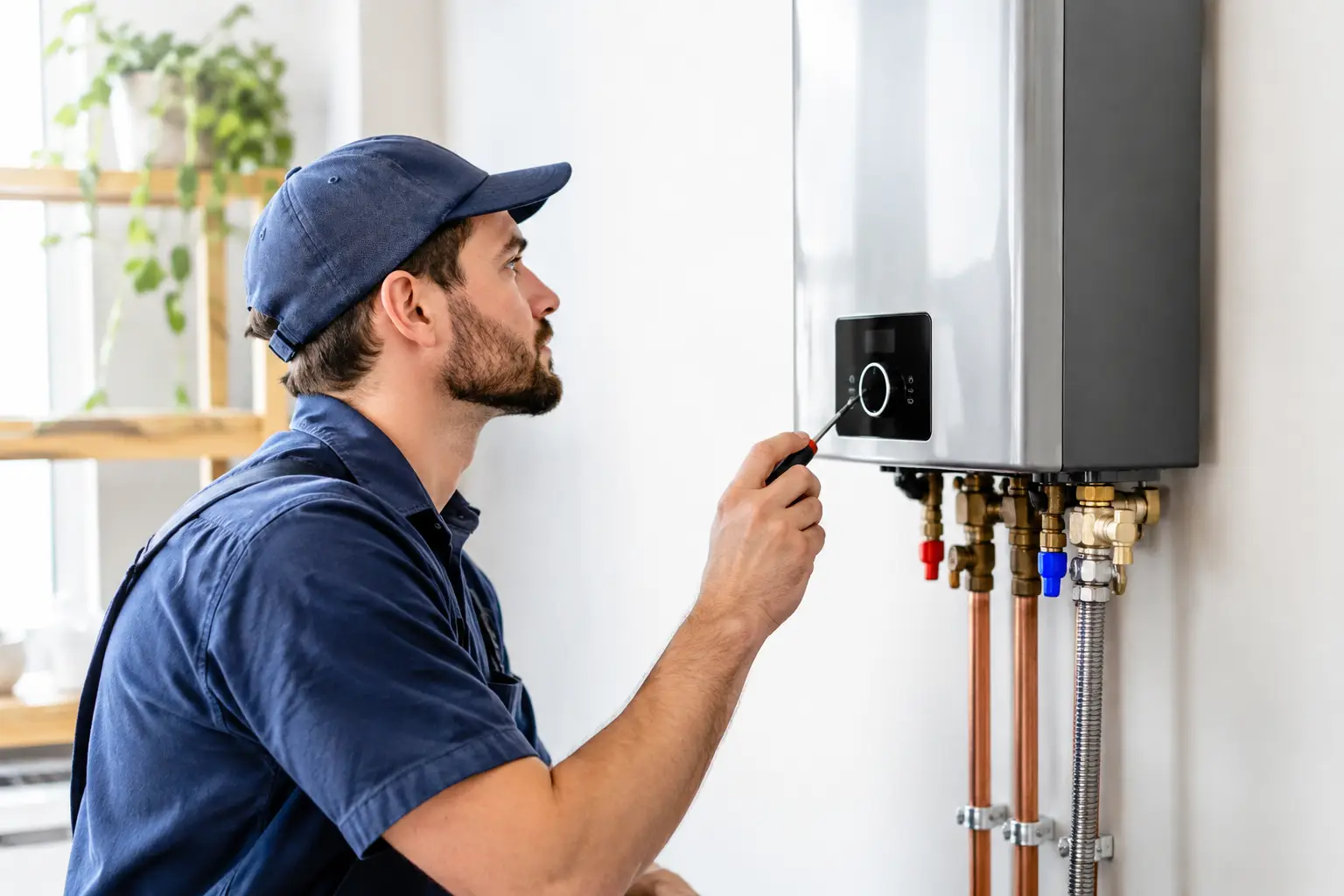
When a tankless water heater stops delivering hot water, the disruption is immediate. A cold shower, an error code, or a unit that keeps shutting down can leave you wondering whether the fix is simple or urgent. This tankless water heater troubleshooting guide helps you check the safe, homeowner-level causes first and recognize when a trained technician should take over.
Tankless systems are efficient and dependable when properly sized, installed, and maintained. But unlike a conventional tank water heater, they rely on sensors, venting, gas supply, water flow, and electronic controls working together. That means a small issue in one area can stop the entire system from heating.
Start With Safety Before Troubleshooting
If you smell natural gas, leave the home immediately and call your gas utility or emergency services from a safe location. Do not operate switches, light matches, or try to restart the water heater.
Also stop and call for professional service if you see active water leaking from the unit, scorched wiring, melted components, or discolored vent piping. Tankless water heaters involve gas combustion, high-voltage electrical parts, and hot water under pressure. Resetting a control panel may be reasonable. Removing covers, adjusting gas components, or opening sealed combustion parts is not a DIY repair.
For all other concerns, begin by checking the display panel. Most units show an error code that gives a technician a useful starting point. Write down the code, when it appears, and whether it happens at every faucet or only during certain uses.
Tankless Water Heater Troubleshooting Guide: Common Problems
No hot water at any fixture
If there is no hot water anywhere in the house, first confirm that the unit has power. Check whether the display is lit, verify that the electrical outlet has not tripped, and look at your home’s breaker panel. A tankless gas water heater still needs electricity to operate its controls, fan, and ignition system.
Next, make sure the unit is turned on and the temperature setting has not been lowered accidentally. Then check whether the cold-water isolation valve and gas shutoff valve are open. Handle positions vary, so do not force anything if you are unsure.
If the display has power but the unit will not heat, possible causes include an ignition failure, gas-supply problem, blocked vent, failed sensor, or internal control issue. These conditions need professional diagnosis. Repeatedly resetting the heater without addressing the cause can create more frustration and may conceal a safety issue.
Water gets warm, then turns cold
Intermittent hot water often points to a flow-rate issue. Tankless heaters need a minimum amount of water moving through them before they activate. A partially clogged faucet aerator, low-flow showerhead, dirty inlet filter, or a fixture that is only slightly opened may not provide enough flow for consistent heating.
Try running hot water at one fixture at a time and open the handle fully. If the water stays hot at a sink but turns cold during a shower, the shower valve or showerhead may be the issue. If the problem occurs throughout the home, the water heater may have mineral buildup, a failing flow sensor, or a sizing issue.
Demand also matters. A properly working unit has a maximum hot-water output, especially during Connecticut winters when incoming groundwater is colder. Running two showers, a dishwasher, and laundry at once can exceed the system’s capacity. That is not always a repair problem, but it may indicate the unit is undersized for your household’s actual demand.
Water is hot, but not hot enough
Check the temperature setting before assuming the heater has failed. Many households find a setting around 120 degrees comfortable and safer for everyday use, though individual needs vary. Raising the setting too high increases scald risk, especially for children and older adults.
If the setting is correct but the water remains lukewarm, check whether a single-handle faucet or mixing valve is allowing cold water to cross into the hot-water line. This can make it seem as though the tankless unit is underperforming. A technician can isolate fixtures and test the system to find the source.
Mineral scale can also reduce heat transfer inside the heat exchanger. This is particularly relevant for homes with hard water or private wells. Over time, scale makes the heater work harder, can reduce output, and may trigger error codes. A professional flush and inspection can restore performance before the buildup causes more expensive damage.
The unit shuts off during use
A tankless water heater that starts normally and then shuts down may be protecting itself. Common triggers include restricted combustion air, venting problems, overheating, poor gas pressure, dirty filters, or a condensate drainage issue on a condensing model.
Check the exterior vent termination from the ground, if it is safely accessible. Snow, leaves, insect nests, and other debris should never block the intake or exhaust. In Northwest Connecticut, snow and ice deserve special attention after a storm. Do not insert tools into the vent or disconnect piping. A venting issue can affect safe combustion and requires prompt professional service.
If shutdowns happen only during freezing weather, inspect exposed water lines around the system for signs of freezing. Tankless units can have freeze protection, but it depends on the heater having electrical power and being installed correctly. A frozen line can damage plumbing quickly, so turn off water if a pipe is leaking and call for help.
Strange noises or rumbling
A brief fan sound or click during startup can be normal. Loud rumbling, banging, whistling, or persistent vibration is not something to ignore.
Rumbling and popping may signal scale buildup in the heat exchanger. Whistling can point to water-flow restrictions or pressure issues. Banging may be water hammer in the plumbing system rather than a water heater failure. Because the sound can travel through pipes, the location where you hear it is not always the location of the problem.
A technician can determine whether the solution is descaling, filter cleaning, pressure adjustment, pipe support, or a repair to the unit itself. Addressing unusual sounds early can help protect the heat exchanger, which is one of the most important components in a tankless system.
Simple Checks Homeowners Can Make
Before scheduling service, there are a few practical checks that can save time without putting your home at risk. Confirm the unit has power, make sure the display is on, and note any error code. Verify that the water and gas shutoff valves appear open. Check your electrical panel for a tripped breaker, and look outside for obvious debris around the vent termination.
You can also remove and rinse faucet aerators or showerhead screens if low flow affects only one fixture. If your owner’s manual specifically explains how to clean the cold-water inlet filter, follow those instructions carefully with the water supply shut off. If the filter is difficult to access, damaged, or heavily coated with debris, leave the work to a professional.
Avoid using chemical drain cleaners, adding unapproved cleaners to the water heater, bypassing safety switches, or attempting to adjust gas pressure. Those shortcuts can damage the equipment and create a much larger repair.
Why Maintenance Prevents Many Tankless Water Heater Problems
Tankless water heaters do not store 40 or 50 gallons of hot water, but they are not maintenance-free. Annual service is a smart baseline for many homes. Homes with hard water, well water, heavy hot-water use, or manufacturer-specific maintenance requirements may need attention more often.
A complete maintenance visit typically includes checking for error history, inspecting connections and venting, cleaning accessible filters, evaluating combustion-related components, and flushing mineral scale from the heat exchanger when needed. The right service schedule depends on water quality, system age, usage, and the manufacturer’s recommendations.
Maintenance is especially valuable before the heating season, when a water-heater failure is more than an inconvenience. Consistent care can improve efficiency, support reliable performance, and catch small concerns before they turn into a no-hot-water emergency.
When to Call a Tankless Water Heater Professional
Call for service when error codes return after a reset, hot water is inconsistent throughout the home, the unit leaks, or the heater shuts down repeatedly. Professional help is also the right choice for suspected venting issues, gas concerns, electrical faults, scale buildup, or a system that cannot keep up with normal household demand.
A qualified technician can test water flow, gas pressure, ignition, sensors, venting, and heat-exchanger performance instead of replacing parts based on guesswork. For homeowners in Morris and across Litchfield County, Escape Plumbing & Heating provides clear diagnosis, straightforward pricing, and dependable repair options to restore hot water without unnecessary delays.
Your tankless water heater should make daily routines easier, not leave your household planning around cold water. A quick check of the safe basics is useful, but persistent problems deserve a precise repair before they become a bigger interruption.