A water heater rarely fails at a convenient time. One day the shower runs normally; the next, the water is lukewarm, rusty, or gone altogether. When replacement becomes necessary, the choice between tankless versus tank water heaters can feel bigger than it first appears. Both can provide dependable hot water, but the best fit depends on your home’s demand, utility setup, budget, and water conditions.
For homeowners in Litchfield County and surrounding Connecticut communities, the decision often involves more than efficiency ratings. Older homes may need venting, gas-line, electrical, or plumbing updates. Homes served by private wells may also need more frequent maintenance to protect either type of unit from mineral buildup. A clear comparison helps you invest in comfort without surprises.
How Tank Water Heaters Work
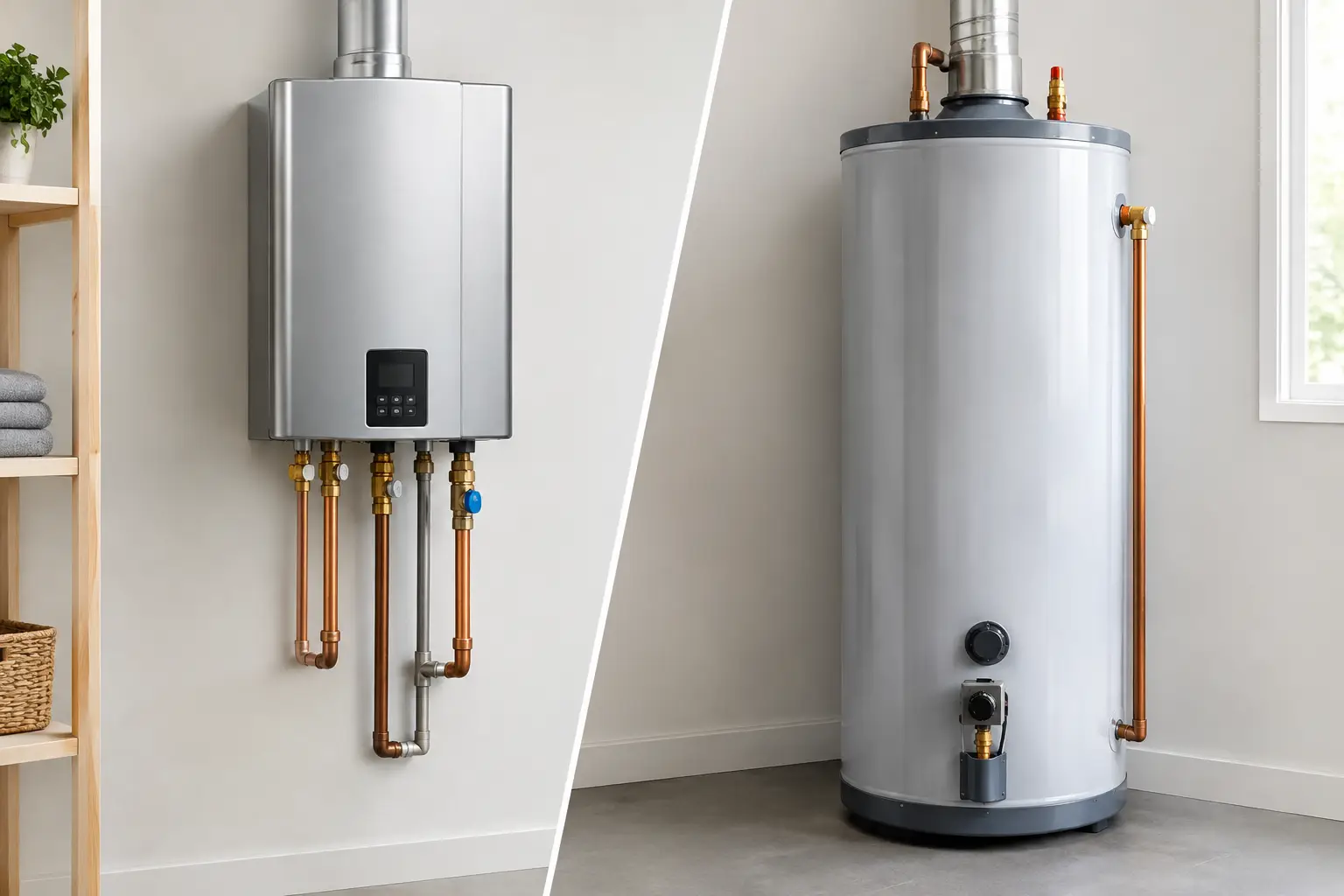
A traditional water heater stores a ready supply of heated water in an insulated tank, commonly 40 to 75 gallons. When you turn on a hot-water fixture, heated water leaves the top of the tank and cold water enters at the bottom to be warmed.
Its biggest advantage is simple, proven operation. A properly sized tank heater can comfortably serve many households, especially when hot-water use is predictable. The equipment and installation are usually less expensive upfront than a tankless system, and replacement can be straightforward when the new unit uses the same fuel type and fits the existing space.
The trade-off is standby heat loss. Because the unit maintains a full tank of hot water around the clock, it uses energy even when no one is showering or running a load of laundry. Once the stored hot water is used, the household may need to wait for the tank to recover. That can be frustrating during busy mornings or when several people need consecutive showers.
When a Tank Heater Is the Practical Choice
A storage-tank water heater is often a strong choice for homeowners who want a dependable replacement at a lower initial cost. It can also make sense where a home’s gas supply, electrical service, venting, or physical layout would make tankless installation more involved.
Sizing matters more than simply choosing the largest tank. A professional should consider your household size, peak-hour hot-water use, fuel source, and the heater’s first-hour rating. A correctly sized 50-gallon unit may outperform an oversized or poorly matched model in everyday use.
How Tankless Water Heaters Work
Tankless water heaters heat water as it flows through the unit. Rather than keeping dozens of gallons hot in storage, the system activates when you open a hot-water faucet. This is why tankless units are often called on-demand water heaters.
The appeal is easy to understand: no stored tank can be emptied by a long shower, and the compact equipment can free up floor space in a utility room or basement. Because it only heats water when demand occurs, a properly selected tankless unit may reduce energy use compared with a conventional tank heater.
But “endless hot water” has an important qualifier. A tankless system can provide hot water continuously only within its rated flow capacity. If two showers, a dishwasher, and a washing machine run at once, the unit must produce enough heated water for all of them. During a Connecticut winter, colder incoming water means the heater has to work harder, which can reduce the available flow rate.
Tankless Capacity Is About Flow, Not Gallons
Tankless sizing is based on gallons per minute and temperature rise. A household may need enough capacity for one shower and a dishwasher at the same time, or it may need to support several bathrooms during the morning rush. The right answer depends on real habits, not a one-size-fits-all equipment label.
A trained technician can calculate your expected demand, inspect the home’s fuel and venting requirements, and recommend a unit sized for reliable performance. This step prevents a common disappointment: installing a high-efficiency unit that cannot keep up with the household’s busiest hour.
Tankless Versus Tank Water Heaters: Key Differences
The clearest difference is the balance between upfront cost and long-term operation. Conventional tank heaters generally cost less to purchase and install. Tankless systems often cost more initially because installation may require a larger gas line, dedicated electrical circuit, new venting, condensate drainage, or changes to water piping.
Tankless equipment can offer energy savings, particularly for households with moderate hot-water use. However, savings vary. A large family with frequent, simultaneous demand may prioritize capacity over efficiency. A homeowner replacing a failed tank heater quickly may prioritize a dependable same-day replacement that fits the current system.
Service life is another consideration. Tank water heaters commonly last around 8 to 12 years, though maintenance, water quality, and installation conditions affect that range. Tankless units can often last longer, sometimes 15 to 20 years or more with proper care. Their internal parts may be replaceable, but the equipment still needs regular professional service.
Space also matters. A tankless unit mounts on a wall, which can be valuable in a tight mechanical room. A tank heater needs floor space and clearance around the unit. On the other hand, a tankless installation should never be chosen on space savings alone if the home cannot support the needed fuel, venting, and water-flow requirements.
Water Quality and Maintenance Matter in Connecticut Homes
Whether your home has municipal water or a private well, mineral content can affect water-heater performance. Hard water can create scale inside a tankless heat exchanger and reduce efficiency over time. In a tank-style heater, sediment can settle at the bottom of the tank, contributing to noise, slower recovery, and premature wear.
Tank heaters benefit from periodic flushing, anode-rod inspection, and safety checks. Tankless systems should be descaled on a regular schedule, especially in homes with hard water. The exact frequency depends on water conditions and household use.
If your home uses well water and you have noticed scale on fixtures, cloudy water, staining, or changing water pressure, address those concerns as part of the water-heater conversation. A water-conditioning solution may help protect plumbing fixtures and extend the life of your new equipment.
Installation Details That Affect the Real Cost
The price on the equipment is only part of the project. A professional replacement quote should account for the complete installation, including removal of the old unit, required connections, venting, safety components, permits where applicable, and any necessary upgrades.
For a tankless water heater, gas-fired models may require larger gas piping to deliver sufficient fuel during peak operation. They may also need new direct venting or a properly managed condensate line. Electric tankless models can demand substantial electrical capacity and are not always practical for whole-home use without major electrical upgrades.
For tank water heaters, fuel type, venting, drain-pan needs, seismic requirements where applicable, and location all affect the work. Gas water heaters also need correct combustion air and venting. These are safety-critical details, not areas for guesswork.
Straightforward upfront pricing is especially valuable here. Before work begins, you should know what equipment is being installed, what changes are needed, and what the full project includes.
Which Water Heater Fits Your Home?
Choose a tank water heater when you want a lower initial investment, have consistent demand, and prefer a familiar system with a relatively simple replacement path. It remains a reliable option for many homes.
Consider tankless when you want to reduce standby energy use, reclaim floor space, expect to stay in the home long enough to value its potential service life, and can support the installation requirements. It can be an excellent upgrade, but only when it is properly sized for your household’s real hot-water demand.
If your current heater is leaking, producing discolored water, making rumbling noises, or failing to provide enough hot water, do not wait for a complete outage. A qualified local plumbing professional can evaluate the existing system, explain the practical options, and help you restore dependable hot water with a solution built for your home.