
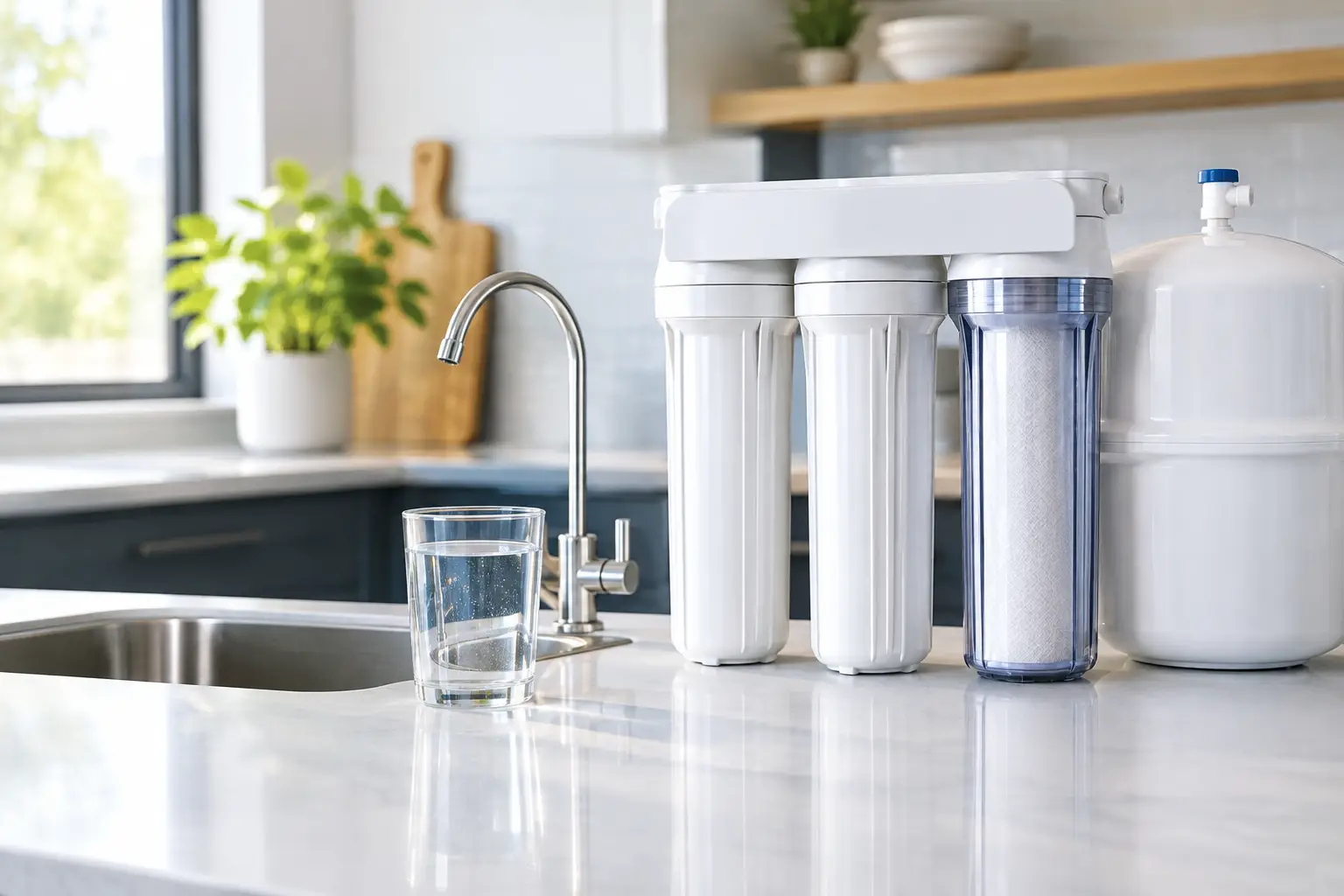
A glass of water can look perfectly clear and still leave you with questions. Maybe your tap water has a metallic taste, a sulfur-like odor, cloudy particles after a storm, or orange staining around fixtures. For many Northwest Connecticut homeowners, especially those on private wells, water filtration is not about chasing a luxury upgrade. It is about making everyday water more pleasant to use and protecting the plumbing equipment that keeps the home running.
The right solution starts with the actual water coming into your house. A filter that works well for sediment will not necessarily fix hard-water scale, bacteria concerns, iron staining, or a chlorine taste. Before investing in equipment, identify the issue, test the water when appropriate, and choose a system designed for the results.
What Water Filtration Can Solve at Home
Water filtration removes or reduces specific materials in your water supply. Depending on the system, that may include sand, silt, rust particles, chlorine, unpleasant odors, iron, manganese, or other contaminants identified through testing. It can improve the taste and appearance of drinking water, but its benefits often reach much further.
Sediment is a common issue in homes supplied by wells. Fine grit can clog faucet aerators, reduce appliance performance, and collect in water heater tanks. Iron and manganese may cause red-brown or dark stains on sinks, toilets, laundry, and dishes. Hydrogen sulfide can produce the familiar rotten-egg smell that makes a shower or glass of water hard to enjoy.
A properly selected treatment system can also help protect plumbing fixtures, water heaters, washing machines, dishwashers, and ice makers from premature wear. That said, filtration is not a cure for every water concern. High mineral content, for example, is often better addressed with water conditioning or softening. A professional assessment separates the problem from the solution, so you are not paying for equipment that does not address what is in your water.
Start With Water Testing, Not a Guess
Water issues can have similar symptoms but different causes. Brown water may be caused by iron, sediment, corroding interior pipes, or temporary disturbance in a well. An odor may originate in the water source, a water heater, a drain, or a plumbing fixture. Treating the wrong cause can leave the problem in place.
A water test provides the information needed to make a sound decision. For private-well homes, testing may evaluate factors such as pH, hardness, iron, manganese, bacteria, nitrates, and other concerns relevant to the property. The right test depends on your symptoms, location, well conditions, and whether the issue is ongoing or appeared suddenly.
If your water has changed quickly after heavy rain, nearby construction, a power outage, or well work, do not assume it is a minor inconvenience. Changes in color, taste, pressure, or odor deserve timely attention. A plumbing professional can inspect the water system, pressure tank, well components, and treatment equipment while helping determine the next practical step.
When a Water Problem May Be a Plumbing Problem
Not every unpleasant tap-water issue begins at the source. If discoloration is limited to hot water, the water heater may need inspection. If one faucet has low flow while others are normal, sediment could be trapped in that fixture or its supply line. If water smells only near a particular sink, the drain may be the source rather than the drinking water.
This is one reason an in-home evaluation matters. It avoids treating the entire house for a localized plumbing repair and helps ensure a whole-home system is recommended only when it is genuinely needed.
Common Water Filtration Options
There is no single best filter for every household. The best system is the one sized and configured for your water quality, household demand, plumbing layout, and long-term maintenance expectations.
A sediment filter is often the first line of defense for well water with visible particles, sand, or rust. It captures debris before it reaches fixtures and appliances. Cartridge filters are straightforward, but they need regular replacement. Ignoring a loaded filter can restrict water flow and reduce system performance.
Activated carbon filtration is commonly used to reduce chlorine taste and odor in municipally supplied water. It may also improve certain organic tastes and smells. Carbon can be installed at a single drinking-water faucet or as a whole-home system, depending on what you want to improve. A point-of-use system may be enough if your primary concern is drinking and cooking water. Whole-home treatment makes more sense when water quality affects showers, laundry, appliances, and every faucet.
Iron and manganese filtration systems are designed for staining, metallic taste, and related well-water concerns. These systems may use oxidation and filtration media, and some require regeneration or backwashing. Proper sizing is essential. A unit that is too small may not keep up with a busy household, while an oversized or improperly installed system can waste water and create unnecessary service needs.
Reverse osmosis is generally used as a point-of-use drinking-water treatment option. It can reduce a broad range of dissolved materials, but it does not replace the need to address whole-home sediment, hardness, or iron issues when those are present. It also requires periodic filter and membrane maintenance and typically produces a smaller volume of treated water than a whole-house system.
Ultraviolet treatment may be recommended when testing identifies a microbiological concern and the water conditions support its use. UV systems disinfect water with light, but they do not remove sediment, minerals, or staining metals. Clear water is necessary for UV treatment to work effectively, so pretreatment is often part of the plan.
Filtration, Water Softeners, and Conditioners Are Different
Homeowners often use these terms interchangeably, but they perform different jobs. Water filtration targets particles, odors, chlorine, and certain contaminants. Water softeners reduce hardness minerals such as calcium and magnesium, which are responsible for scale buildup, spotty dishes, stiff laundry, and reduced efficiency in water-using equipment.
Hard water can be especially tough on water heaters. Mineral scale can settle in a conventional tank or build up in tankless water heater components, affecting performance and increasing maintenance needs. If you have both hard water and iron or sediment, your home may need more than one treatment stage. The order matters because pretreatment can protect the equipment that follows.
A water conditioner may refer to several approaches, so ask exactly what the equipment is designed to do. Clear expectations are better than broad promises. You should know which water issue the system addresses, what it will not address, how often it needs service, and what ongoing costs to expect.
Choosing a Whole-Home Water Filtration System
A whole-home system should be chosen around the way your household uses water. A two-person home with one bathroom has different flow requirements than a family running showers, laundry, a dishwasher, and outdoor water at the same time. The incoming water pressure, pipe size, location for installation, drain access, and well-pump capacity can all affect the design.
Ask practical questions before approving any installation. Find out whether the system needs electricity, salt, replacement cartridges, periodic media replacement, or a drain connection for backwashing. Ask how much water it uses during cleaning cycles and whether the equipment can maintain adequate flow during peak demand. Upfront pricing should also account for installation requirements, not just the equipment itself.
Maintenance is part of dependable water treatment. Filters need replacement, softeners need salt when applicable, and some systems require annual inspection or cleaning. Skipping maintenance can allow water quality to decline quietly and can put extra strain on the plumbing system. A professional maintenance plan helps keep the equipment working as intended and catches small concerns before they become inconvenient failures.
When to Call for Professional Help
Some countertop and faucet filters are useful for a limited drinking-water goal. But repeated staining, strong odors, low water pressure, cloudy water, changes after storms, or concerns about a private well call for a more complete evaluation. DIY trial and error can add up quickly when it means buying several filters without solving the actual source of the problem.
For homeowners in Morris and across Litchfield County, Escape Plumbing & Heating can evaluate water-quality concerns alongside the plumbing and equipment that affect your home’s water supply. That includes identifying whether the answer is filtration, conditioning, a water-heater repair, well-system service, or a combination of solutions.
Clean, dependable water should not be a daily question mark. When your water tells you something is wrong, a clear diagnosis and the right treatment plan can restore confidence at every tap.