
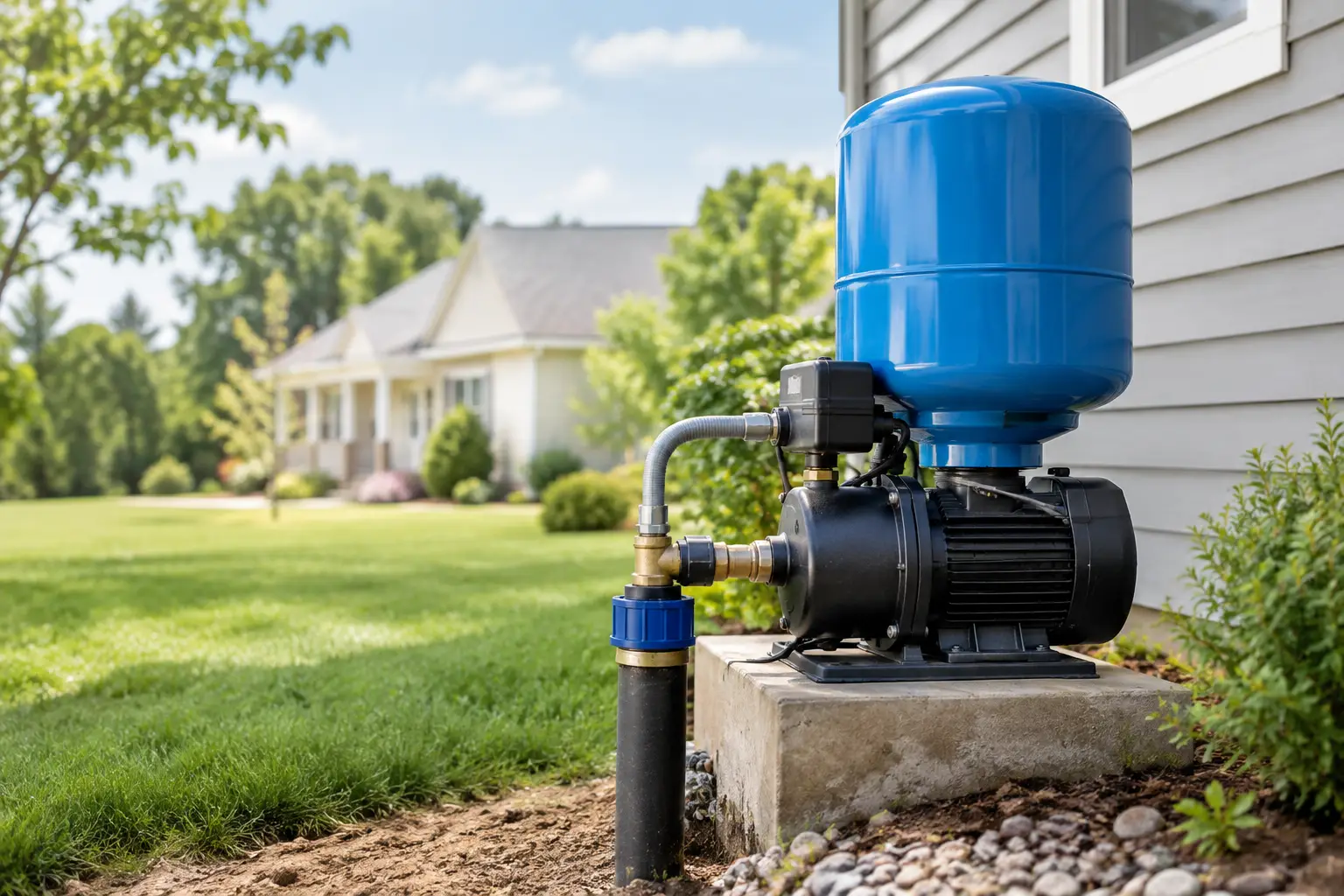
A private well gives your home independence, but it also means your water supply depends on equipment you may never see. This well pump guide explains what keeps water moving, what warning signs deserve attention, and when a prompt professional repair can prevent a full loss of water.
For homeowners across Northwest Connecticut, a well pump problem often becomes obvious at the worst possible time: during a shower, while doing laundry, or when the faucets suddenly run dry. The good news is that many failures give clues before they become an emergency. Knowing those clues helps you act early and protect your home’s water supply.
How a Well Water System Works
Your well system has more than one working part. The pump moves water from the well into your home, while a pressure tank stores a small amount of pressurized water so the pump does not need to run every time someone opens a faucet. A pressure switch tells the pump when to turn on and off.
Most homes use either a submersible pump or a jet pump. A submersible pump sits deep inside the well and pushes water upward. It is common in deeper wells because it can move water efficiently over a significant distance. A jet pump is usually installed above ground, often in a basement, utility room, or well house, and pulls water from the well. It may be used for shallow wells or specific older system designs.
The pump, pressure tank, switch, wiring, piping, and water treatment equipment all affect performance. That is why low water pressure does not automatically mean the pump has failed. A clogged sediment filter, failing pressure switch, waterlogged tank, blocked line, or well-related issue can produce similar symptoms. Accurate diagnosis matters before any repair or replacement decision is made.
Signs Your Well Pump Needs Attention
A complete loss of water is the clearest sign of trouble, but it is not the only one. Call for service if you notice changes that persist rather than a one-time interruption.
Weak or fluctuating water pressure
Pressure that drops while a shower is running, faucets that spit air, or water flow that surges from strong to weak can point to a pressure tank, switch, pump, or piping problem. In some cases, pressure loss can also be related to a clogged filter or water treatment system. A technician can test the system and identify the cause instead of replacing parts based on guesswork.
The pump turns on and off too often
A pump that starts and stops repeatedly is known as short cycling. This is hard on the motor and can raise electrical use. One common cause is a pressure tank that has lost its proper air charge or has a damaged internal bladder. Left alone, short cycling can shorten the life of a pump that might otherwise have continued working for years.
Dirty, cloudy, or sandy water
Water quality changes deserve quick attention. Sediment may come from a filter issue, changes within the well, a deteriorating component, or a pump positioned too close to the bottom of the well. Do not assume the problem is only cosmetic. Sand can damage fixtures, clog treatment equipment, and wear down appliances over time.
Unusual sounds or a higher electric bill
Clicking from the pressure switch, humming from equipment, or a pump that seems to run continuously can signal a developing problem. A sudden increase in electric use may also indicate the pump is working harder than it should. These symptoms are worth investigating before the system stops altogether.
What to Check Before Calling for Repair
Homeowners can safely rule out a few simple issues without taking apart well equipment. First, check whether your home has power and whether the well pump breaker has tripped. If it has, reset it once. If it trips again, leave it off and call a professional. Repeated breaker trips can indicate an electrical fault or a failing pump motor.
Next, look for a shutoff valve that may have been accidentally closed after recent work. If your home uses a sediment filter or water conditioner, check whether the filter is overdue for replacement or whether the bypass setting has changed. A heavily clogged filter can significantly reduce water flow.
Avoid opening the pressure switch cover, adjusting electrical controls, or attempting to pull a well pump yourself. Well pump systems involve electricity, pressurized plumbing, heavy equipment, and components located deep in the well. A seemingly small mistake can create a safety risk or turn a repairable issue into a more expensive replacement.
Pressure Tanks Matter More Than Most Homeowners Realize
The pressure tank is not simply a storage tank. Its job is to maintain steady pressure and reduce how often the well pump has to run. Modern bladder tanks use an internal diaphragm to keep air and water separated. When the bladder fails, the tank can become waterlogged, leaving little room for the pressure cushion the system needs.
A failing tank may cause short cycling, unstable pressure, or premature pump wear. In older homes, the tank may be undersized for the household’s current demand. Adding bathrooms, using larger appliances, or installing irrigation can increase water use beyond what an older system was designed to handle.
Tank size is a practical decision, not a one-size-fits-all upgrade. A larger tank can reduce pump cycles, but the right choice depends on the pump’s output, household demand, available space, and the condition of the existing equipment. A professional evaluation keeps the system balanced rather than replacing one part without considering the whole setup.
Repair or Replace: Making the Right Call
A well pump can last many years, but its life depends on water quality, usage, installation quality, electrical conditions, and maintenance. There is no honest universal timeline. A pump that is still delivering steady pressure may need a targeted repair, while an older pump with motor issues, recurring failures, or poor performance may be a better candidate for replacement.
Replacement can be a smart long-term choice when the pump has reached the end of its expected service life or when repairs would only delay a larger failure. It can also be an opportunity to correct sizing problems, replace worn controls, and improve pressure tank performance. However, replacement should follow a clear diagnosis, not fear-based advice.
At Escape Plumbing & Heating, trained technicians evaluate the symptoms, test the system, explain the findings in plain language, and provide straightforward pricing before work begins. That gives homeowners the information needed to choose a repair or replacement with confidence.
Protecting Your Well System Between Service Visits
Well systems do not need constant attention, but routine care can reduce surprises. Keep the area around accessible equipment dry and clear so leaks and unusual noises are easier to spot. Replace sediment filters according to your water conditions, not only the calendar. Homes with heavy sediment may need more frequent service than homes with clearer water.
Pay attention after major storms, power outages, or extended periods of heavy water use. A sudden change in pressure or water clarity is easier to address early. If your home has water treatment equipment, regular maintenance also helps protect the pump, fixtures, and appliances from mineral buildup or sediment damage.
A professional well system check can assess pressure settings, tank condition, pump cycling, electrical connections, and water flow. For homeowners planning a renovation, adding a bathroom, or installing irrigation, it is also wise to confirm that the existing well equipment can support the increased demand.
When to Treat a Well Pump Problem as Urgent
Call for prompt service when you have no water, a pump that will not stop running, repeated electrical breaker trips, visible leaks around the pressure tank or piping, or water that suddenly looks or smells unusual. If your home relies on well water for cooking, bathing, toilets, and heating equipment, waiting can disrupt far more than a single fixture.
A dependable water supply should not be something you have to think about every day. If your pressure is changing, your pump is cycling, or your water has stopped, getting a clear diagnosis now can restore comfort and help prevent a larger problem later.