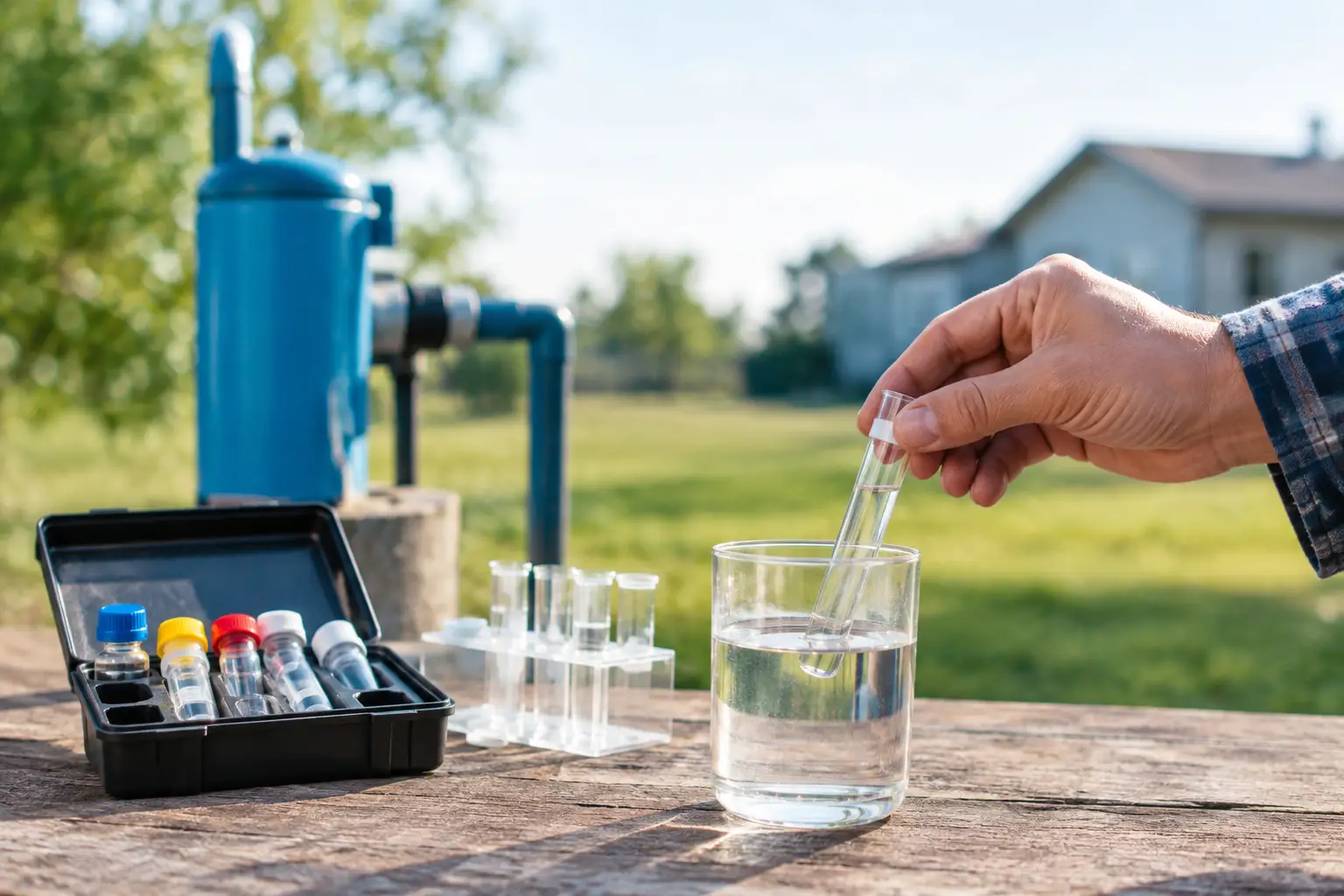
A private well gives your home an independent water supply, but it also makes you responsible for knowing what is in that water. To test well water is not just a response to an odd taste or a rusty stain. It is a practical way to protect your family, plumbing fixtures, water-using appliances, and peace of mind.
In Northwest Connecticut, well water conditions can vary from one property to the next. A neighbor’s clean test result does not confirm that your supply is safe, and clear water is not always clean water. Many common well-water concerns have no noticeable color, odor, or taste. Regular testing gives you facts before a small concern becomes a household problem.
When Should You Test Well Water?
For most private wells, annual testing for bacteria and nitrate is a sensible baseline. A more complete water-quality panel is often worthwhile every few years, especially if your household has experienced recurring water issues or you have never established a clear baseline for the property.
Some situations call for testing sooner. If your water suddenly smells different, turns color, tastes metallic, or leaves new stains on sinks and laundry, schedule a test before assuming a filter will solve the issue. Changes in water pressure, sediment in fixtures, or frequent clogging of faucet aerators may also point to a water-quality or well-system concern.
You should also test after a major event that could affect the well or its surrounding area. This includes flooding, a well pump repair, replacement of a pressure tank, damage to the well cap, nearby construction, or a long period when the home was vacant. If you are buying a home with a private well, a current, comprehensive water test should be part of your decision-making process.
Households with infants, pregnant family members, older adults, or anyone with a weakened immune system should be especially proactive. The right testing schedule depends on the well’s history, your location, nearby land use, and the results of prior tests.
What a Well Water Test Can Reveal
A certified laboratory test is more useful than relying on appearance alone. The appropriate panel depends on your property and symptoms, but it commonly evaluates bacteria, nitrate, pH, hardness, iron, manganese, and other minerals.
Bacteria and coliform concerns
Coliform bacteria testing helps identify whether surface water or another contamination pathway may be reaching the well. A positive result does not automatically mean every glass of water will make someone sick, but it does require prompt attention. A professional can help identify likely entry points, such as a damaged cap, cracked well components, poor grading around the well, or a nearby source of contamination.
E. coli is a more urgent finding because it can indicate contamination from human or animal waste. Do not treat a positive bacterial result as something to ignore until the next routine visit. Follow the laboratory’s guidance and contact a qualified well and plumbing professional to discuss next steps.
Hardness, iron, and manganese
Hard water is common in homes served by private wells. It can leave white scale on fixtures, make soap harder to rinse, shorten the service life of water heaters, and reduce the performance of appliances. Iron may create orange or brown staining, while manganese can leave dark staining and affect taste.
These minerals are not always a direct health emergency, but they can create expensive, ongoing plumbing problems. Treatment should match the actual test results. A basic softener may help with hardness, for example, but iron and manganese often require a different approach or pretreatment. Installing equipment without a full diagnosis can lead to disappointing results and unnecessary cost.
pH, corrosion, and plumbing protection
Water with a low pH can be acidic and may slowly corrode pipes, fittings, and fixtures. Signs can include blue-green staining near copper plumbing, metallic-tasting water, pinhole leaks, or premature fixture wear. High pH can contribute to scale buildup instead.
Testing pH alongside mineral levels helps determine whether the concern is water chemistry, aging plumbing, or both. This distinction matters. Treating corrosive water can help protect the plumbing system, while a deteriorating pipe may need repair or replacement regardless of the water treatment plan.
Contaminants based on your property’s risks
Depending on the location and history of the property, a lab may recommend testing for additional contaminants. These can include lead, arsenic, radon in water, volatile organic compounds, or pesticides. Properties near agricultural activity, fuel storage, industrial sites, heavily traveled roads, or older plumbing may have different testing needs than a rural home with no nearby risk factors.
This is where local knowledge matters. The best test panel is not necessarily the largest one available. It is the panel that accounts for your well, your home, and the concerns identified around your property.
How to Get Accurate Well Water Results
An inaccurate sample can lead to the wrong treatment decision. Follow the laboratory’s sampling instructions exactly, including which faucet to use, how long to run the water, and how quickly the sample must be returned. For bacteria testing, the sample container is sterile. Do not rinse it, touch the inside of the cap, or set it down where it could become contaminated.
Avoid collecting a sample from a faucet with a filter, aerator, or water treatment device unless the lab specifically tells you to test treated water. In many cases, you need to know what is coming from the well before it reaches treatment equipment. If you want to verify that an existing softener or filtration system is working, collect separate samples as directed.
It is also helpful to write down what you have noticed before the test. Is the odor strongest after the water has been sitting overnight? Does staining occur only on the hot-water side? Did the issue begin after heavy rain? These details can help a technician interpret the results and inspect the right part of the system.
What to Do After You Receive the Results
Do not let a lab report full of numbers create more stress than clarity. Start by identifying which results affect immediate health, which point to plumbing damage or appliance wear, and which are mainly aesthetic. If bacteria or another health-related contaminant is present, address that first and follow the recommendations provided with the report.
For mineral, hardness, odor, or pH concerns, the next step is determining the cause and the right solution. That may involve cleaning or repairing a well component, adjusting the water system, installing treatment equipment, servicing existing conditioning equipment, or addressing corrosion in the home’s plumbing.
A one-time shock chlorination may be appropriate in certain bacterial situations, but it is not always a permanent answer. If bacteria returns, the well needs a closer inspection to find how contamination is entering the system. Likewise, a filter can improve a symptom without solving a failing pressure tank, old water line, or poorly protected wellhead.
At Escape Plumbing & Heating, the goal is to help homeowners move from confusing water concerns to a clear plan. That means looking beyond the test result, explaining the options in plain language, and recommending work based on what your home actually needs.
Signs Your Water Treatment System Needs Attention
Testing is still useful even if your home already has a softener, neutralizer, iron filter, or other treatment equipment. Media wears out, settings can drift, salt levels can run low, and a system sized for a previous household may no longer meet current demand.
Call for service if stains return after years of clear fixtures, water feels less soft, pressure drops across the treatment system, salt use changes unexpectedly, or your water heater begins showing scale-related performance issues. A treatment system should make life easier, not become another mystery in the basement.
Regular testing gives you a reliable starting point for every water-quality decision. If something about your water has changed, trust the change enough to investigate it. A timely test and a clear professional diagnosis can protect your household comfort, your plumbing investment, and the dependable water supply your home relies on.