A cold shower is frustrating. A leaking water heater, rusty hot water, or a burner that will not stay lit can be much more than an inconvenience. When you need to repair or replace water heater equipment, the right choice depends on the problem, the unit’s age, its condition, and how reliably it can serve your household going forward.
A professional diagnosis gives you the clearest answer. Some issues have a straightforward repair, while others signal that putting more money into an aging tank is likely to lead to another breakdown soon. The goal is not simply to get hot water back for the day. It is to restore dependable comfort without surprising costs or unnecessary delays.
When Water Heater Repair Makes Sense
A repair is often the practical option when the water heater is relatively young, the tank itself is sound, and the issue is isolated. Many common problems affect a component that can be replaced without replacing the entire system.
For an electric water heater, failed heating elements, a thermostat problem, or a tripped breaker may be the cause of limited or no hot water. Gas water heaters can develop ignition, thermocouple, pilot-light, burner, or gas-control issues. These problems need professional attention, especially when gas or combustion is involved, but they do not automatically mean the tank has reached the end of its life.
A temperature and pressure relief valve can also fail, causing water to drip from the discharge pipe. This safety device is essential because it releases excess pressure from the tank. Replacing the valve may be a reasonable repair, but a technician should also determine why the valve opened or leaked in the first place.
Minor leaks may be repairable when they come from a loose connection, a fitting, or the drain valve. Sediment buildup is another common concern in Northwest Connecticut homes, particularly where mineral content or private-well water affects the system. Flushing and maintaining a water heater can sometimes improve performance, reduce noise, and help protect efficiency.
Signs It May Be Time to Replace Your Water Heater
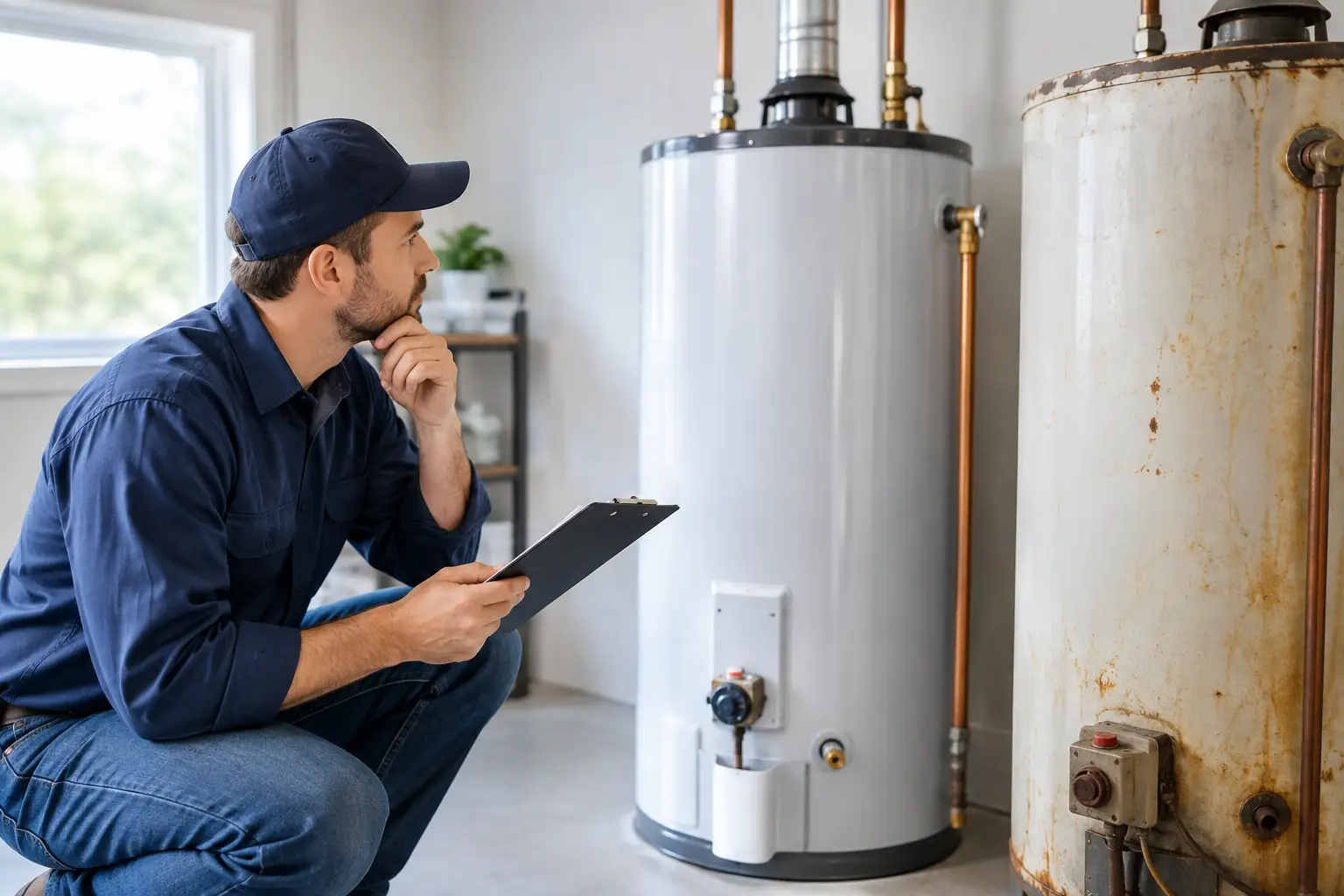
The tank is the dividing line. Once the tank itself is corroded or leaking, replacement is usually the only dependable answer. A tank leak cannot be safely patched in a way that restores long-term reliability.
Watch for moisture or puddling around the base of the unit. Before assuming the tank has failed, a plumber should inspect nearby pipes, valves, and fittings. But water emerging from the tank body, especially around a seam or from underneath the jacket, is a serious warning sign.
Age also matters. Conventional tank water heaters commonly last about 8 to 12 years, though actual service life depends on water quality, maintenance, installation conditions, and usage. If your unit is approaching or past that range and needs a costly repair, replacement often provides better value than continuing to repair aging parts.
Other signs point toward replacement as well:
- Rust-colored water from the hot-water side can indicate internal tank corrosion.
- Repeated repairs suggest multiple components are wearing out.
- Rumbling, popping, or banging may mean heavy sediment has hardened inside the tank.
- Your household regularly runs out of hot water, even when the unit is functioning as designed.
- Energy bills have climbed because an older unit is working harder to heat water.
No single symptom makes the decision for you. A professional can assess whether the problem is a serviceable part, a water-quality issue, an undersized heater, or a tank nearing failure.
Repair or Replace Water Heater: Compare the Real Cost
The cheapest repair today is not always the lowest-cost decision. Consider the repair price alongside the age of the unit, its expected remaining life, and the chance of another failure in the near future.
For example, a modest repair on a four-year-old water heater with no corrosion can be a smart investment. The same repair on a 13-year-old tank that has already needed other work may only postpone a replacement you will need soon. It can also leave you vulnerable to a leak that damages flooring, stored belongings, or finished areas of the home.
Replacement costs vary based on the water heater type, fuel source, capacity, venting requirements, code updates, and installation conditions. A new unit may require adjustments to gas piping, electrical service, venting, drainage, or water connections. Straightforward upfront pricing matters because it helps you compare options based on the full scope of work, not an incomplete equipment price.
If the timing is difficult, financing can make a planned replacement more manageable than waiting for an emergency failure. Replacing a weakening water heater on your schedule gives you time to choose the right system rather than making a rushed decision after the tank begins leaking.
Choose a Replacement That Fits Your Home
Replacing a water heater is an opportunity to correct problems that the old system may have masked for years. The right size depends on the number of people in the home, fixtures used at the same time, bathing habits, laundry needs, and the type of equipment you choose.
A conventional storage-tank water heater stores a set amount of hot water and is a familiar, dependable choice for many homes. If your family has grown or you frequently run out of hot water, moving to a larger capacity or a higher-recovery model may solve the problem.
A tankless water heater heats water as it flows, rather than storing it in a tank. It can provide a long-lasting, efficient option when sized and installed correctly. However, tankless equipment is not automatically the best fit for every household. It may require gas-line upgrades, electrical changes, specialized venting, and water treatment considerations. A home with hard water or well water may benefit from conditioning or filtration that protects the new equipment.
Fuel type also influences the decision. Natural gas, propane, electric, heat-pump, and tankless models all have different installation needs and operating characteristics. The best choice is the one that delivers enough hot water safely and efficiently for your home, not simply the model with the lowest purchase price.
Do Not Ignore Water Heater Safety Warnings
If you smell gas near a gas water heater, leave the area if necessary, avoid switches and open flames, and contact your gas utility or emergency professional according to local safety guidance. Do not attempt to relight or repair the system yourself.
A leaking tank should also be addressed promptly. Turn off the water supply if you can do so safely, and shut off power to an electric heater or set a gas unit to the appropriate safe setting. Water and electricity are a dangerous combination, and a leaking heater can worsen quickly.
For any water heater, keep the area around the unit clear. Do not block combustion air openings or store flammable materials nearby. A qualified technician should inspect venting, gas connections, safety controls, and pressure-relief components during service or replacement.
A Clear Answer Starts With a Proper Diagnosis
Homeowners should not have to guess whether a repair will hold or whether replacement is truly necessary. A trained technician can inspect the system, identify the source of the problem, explain the condition of the tank and components, and present clear options before work begins.
For more than 30 years, Escape Plumbing & Heating has helped homeowners throughout Litchfield County make practical water-heater decisions with prompt service and straightforward pricing. Whether the issue is a small repair, an aging tank, or a hot-water upgrade, the next best step is to address it before a minor warning becomes a cold morning or a damaging leak.
If your water heater is showing its age, schedule an evaluation while you still have time to choose the solution that fits your home and budget.