
A frozen pipe rarely announces itself with much warning. You may notice weak water pressure at a bathroom sink, an unusually cold room, or no water at all from one fixture. In a Northwest Connecticut winter, that small warning can turn into a burst pipe, water damage, and a stressful interruption to your household routine. Knowing how to prevent frozen pipes before temperatures drop is one of the most practical ways to protect your home.
Pipes freeze when the water inside them is exposed to prolonged cold, expands, and creates pressure between the ice blockage and a closed faucet. The pipe does not always split where the ice forms. It can rupture several feet away, often behind a wall, in a ceiling, or near a fitting. That is why prevention is far less costly and disruptive than waiting for a visible leak.
Why Certain Pipes Freeze First
Any pipe can freeze during a hard cold snap, but the highest-risk areas are usually the least protected parts of the home. Unheated basements, crawl spaces, attics, garages, exterior walls, and cabinets along outside walls deserve attention first.
Older homes throughout Litchfield County can be especially vulnerable because insulation levels, pipe layouts, and air sealing have changed over time. A kitchen or bathroom that has worked without trouble for years may still become a problem when a stretch of below-zero weather combines with wind and a small draft near the plumbing.
Pipes supplying sinks on exterior walls are common trouble spots. So are water lines near garage walls, outdoor hose connections, well equipment, and areas where a pipe passes through a foundation or rim joist. If you have had a pipe freeze before, treat that location as a known risk rather than assuming it was a one-time event.
How to Prevent Frozen Pipes Before a Cold Snap
The best approach combines steady heat, insulation, and a little airflow. Each step addresses a different cause of freezing, so do not rely on one measure alone when severe weather is expected.
Keep Your Thermostat Steady
Keep the home heated to at least 55 degrees, including overnight and when you are away. Lowering the thermostat dramatically to save money may cost far more if a pipe freezes and bursts.
Consistency matters more than turning the heat up and down. A home can stay comfortable in the main living area while a pipe in a drafty utility room, crawl space, or exterior-wall cabinet gets dangerously cold. If one room is noticeably colder than the rest of the house, investigate it before the next freeze.
If you leave for a weekend or longer, do not turn the heat off. Ask someone you trust to check the home during an extended cold spell, especially if your property has a history of plumbing issues or relies on a private well system.
Insulate Exposed Plumbing
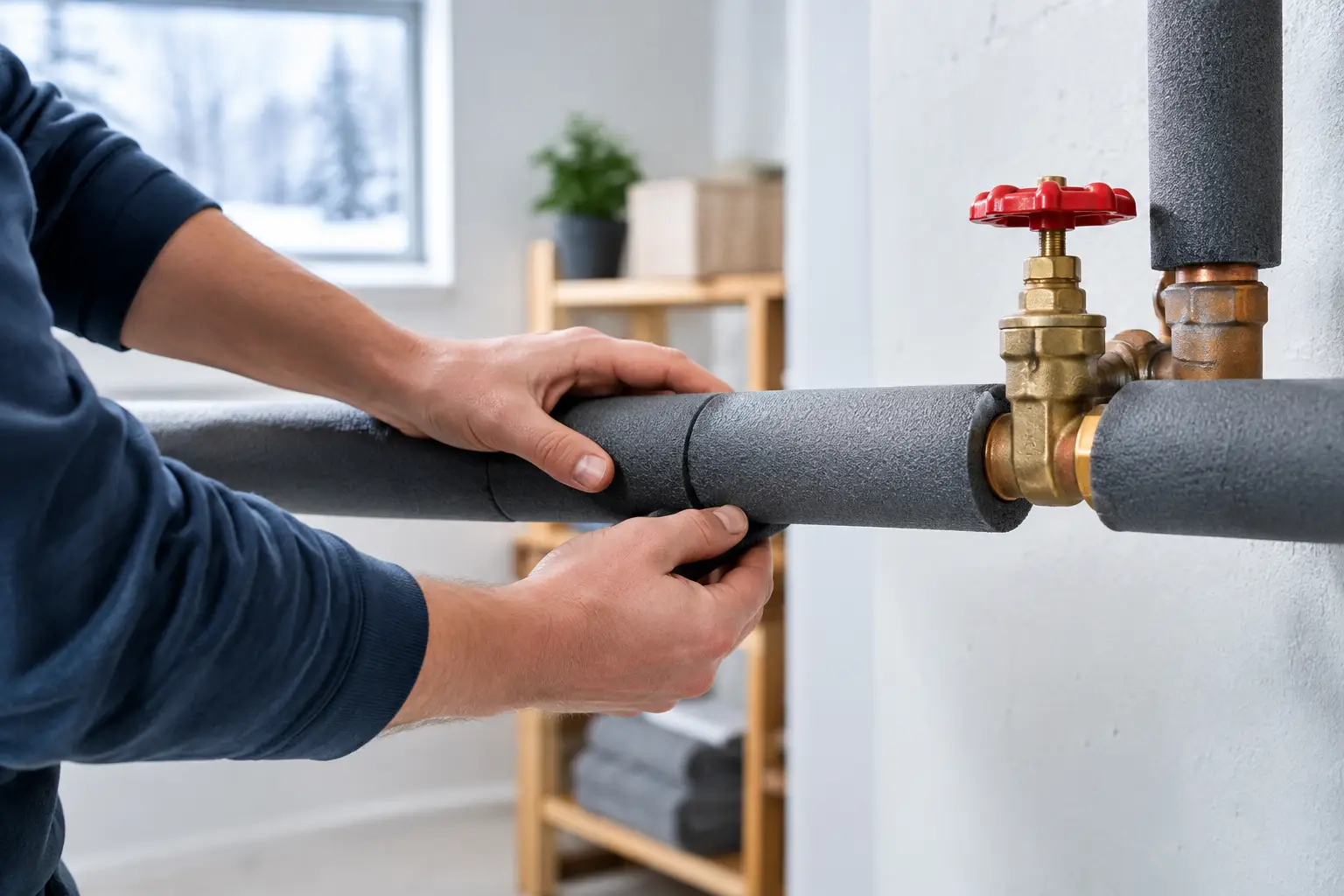
Foam pipe insulation is a useful first line of defense for accessible water lines in basements, crawl spaces, garages, and utility areas. Pay close attention to elbows, valves, and short sections of pipe near exterior walls. Those are easy to overlook and often the places that lose heat fastest.
Insulation helps slow heat loss, but it does not create heat. In an unheated space that stays below freezing for a long period, pipe insulation alone may not be enough. You may need to improve insulation around the room, seal cold-air gaps, or have a plumbing professional evaluate a more permanent solution.
Use only heat tape or heat cable specifically rated for plumbing use and installed according to the manufacturer’s instructions. Improperly installed electrical heating products can create a fire or shock hazard, so this is not an area for guesswork.
Seal Cold Air Around Pipes
A surprising amount of cold air enters around pipe penetrations. Check where plumbing enters the house through foundation walls, sill plates, cabinets, and exterior walls. Small gaps around water lines can funnel icy air directly onto the pipe.
Caulk or approved expanding foam can help seal these openings, depending on the location and material. The goal is to block drafts without covering parts of the plumbing that need future access. If you find moisture, corrosion, or a damaged pipe while checking these areas, schedule a repair instead of sealing over the problem.
Open Cabinet Doors and Interior Doors
During especially cold weather, open cabinet doors beneath kitchen and bathroom sinks on exterior walls. This allows warmer household air to circulate around the supply lines. Keep cleaning products, medications, and other hazardous items secured and out of reach of children and pets before leaving cabinets open.
Also keep interior doors open to rooms that tend to run cold. Closing off an unused room can make sense at other times of year, but it can leave plumbing without enough warm airflow during a freeze.
Disconnect and Drain Outdoor Hoses
Remove garden hoses before winter temperatures arrive. Shut off the indoor valve supplying each outdoor faucet if your home has one, then open the exterior faucet to drain remaining water. Leave the outdoor faucet open after draining so trapped moisture has room to expand.
A frost-free spigot offers added protection, but it is not immune to freezing if a hose remains connected. Water trapped in the hose can extend back into the faucet and damage the plumbing inside the wall.
Should You Let Faucets Drip?
A slow trickle can help prevent freezing in a pipe that is particularly vulnerable, because moving water is less likely to freeze than still water. It also relieves pressure if ice starts to form. However, it is not necessary to run every faucet in the house all winter.
Use this measure strategically during severe cold for fixtures with a known history of freezing or plumbing located along exterior walls. Let both hot and cold water run at a small, steady trickle if the fixture has separate supply lines. If you are on a private well, remember that continuous water use can place added demand on the well pump and water system. A professional can help identify a better long-term fix for a recurring problem.
What to Do If You Suspect a Pipe Is Frozen
Do not ignore reduced flow from a single faucet. Check other fixtures to see whether the issue is limited to one area. If you suspect a pipe is frozen, leave the affected faucet open. As ice begins to thaw, water needs a place to escape.
Then safely warm the area around the suspected frozen section. A hair dryer, heating pad, or portable space heater used with proper clearance and supervision can gradually raise the temperature. Start near the faucet and work back toward the coldest area if the pipe is accessible.
Never use an open flame, propane torch, or any device with direct flame on plumbing. Beyond the obvious fire risk, sudden high heat can damage pipes, fittings, and surrounding materials. Do not use electrical equipment near standing water or a leaking pipe.
If you cannot locate the frozen section, if the pipe is behind a wall, or if you see a bulge, crack, or active leak, turn off your home’s main water supply and call for professional help. Knowing where the main shutoff valve is before winter is one of the most valuable preparations a homeowner can make. Make sure everyone responsible for the home knows how to operate it.
When Recurring Freezing Needs a Permanent Repair
A pipe that freezes repeatedly is signaling a design, insulation, or air-leak problem. Temporary thawing gets water flowing again, but it does not change the conditions that caused the freeze.
The lasting repair may involve relocating an exposed line, improving insulation, sealing exterior gaps, replacing a damaged section of pipe, or adding a safe heat-trace solution. The right answer depends on the pipe material, location, accessibility, and how cold the surrounding space becomes. A trained technician can identify the actual weak point rather than treating the same emergency every winter.
Escape Plumbing & Heating helps homeowners address frozen and burst pipe concerns with prompt service, clear options, and straightforward upfront pricing. When the forecast turns severe, a quick preventive check is easier than managing water damage after a pipe gives way.
Take a few minutes before the next hard freeze to check exposed pipes, outdoor faucets, cold rooms, and your main water shutoff. That small bit of preparation can help keep your water flowing and your home comfortable when winter is at its worst.