
A sewer problem rarely begins with a dramatic backup. More often, it starts with a toilet that gurgles after the washing machine drains, a shower that empties too slowly, or an unexplained sewer odor near the basement. This homeowner guide to sewer inspection explains what those early warnings can mean, how a camera inspection works, and when acting quickly can protect your home from a much larger mess.
When a Sewer Inspection Makes Sense
Your main sewer line carries wastewater from every drain in the house to a municipal sewer connection or, in some properties, a septic system. When that shared line becomes restricted or damaged, the symptoms tend to show up in more than one fixture. A single slow bathroom sink may be a local drain issue. A slow tub, gurgling toilet, and backed-up first-floor shower at the same time point to a deeper problem.
A sewer inspection is especially worthwhile when recurring drain trouble has not stayed fixed after normal drain clearing. It is also a smart diagnostic step before purchasing an older home, after major tree-root growth near the sewer route, or when a home has a history of sewer backups. In Northwest Connecticut, where many properties have mature trees and older underground piping, knowing the actual condition of the line can prevent guesswork and unnecessary excavation.
Do not wait for wastewater to come up through a floor drain. If several fixtures are draining poorly or water appears in a tub or shower when another fixture is used, limit water use and arrange professional service promptly. Running the dishwasher, washing machine, or additional showers can turn a partial blockage into an indoor backup.
Signs Your Sewer Line May Need Attention
A sewer line does not always fail all at once. The pattern and location of symptoms matter. Pay close attention if you notice repeated clogs affecting multiple drains, toilets that bubble when a sink or washer drains, or water backing up into the lowest fixture in the home.
Sewer odors indoors or around the yard also deserve attention. A dry floor drain can cause a temporary odor, but persistent sewer gas may indicate a problem with a drain, vent, cleanout, or sewer line. Soft, unusually green, or wet patches in the yard can be another clue when they appear along the route of the underground pipe, particularly during dry weather.
Older homes may have cast-iron, clay, Orangeburg, or aging galvanized piping. Each material can develop different issues over time. Clay sections can separate or allow root intrusion. Cast iron can corrode and scale internally. Orangeburg, a fiber pipe used in some mid-century homes, can deform or collapse. A camera inspection identifies the condition rather than assuming the cause based on the age of the house alone.
What Happens During a Sewer Camera Inspection
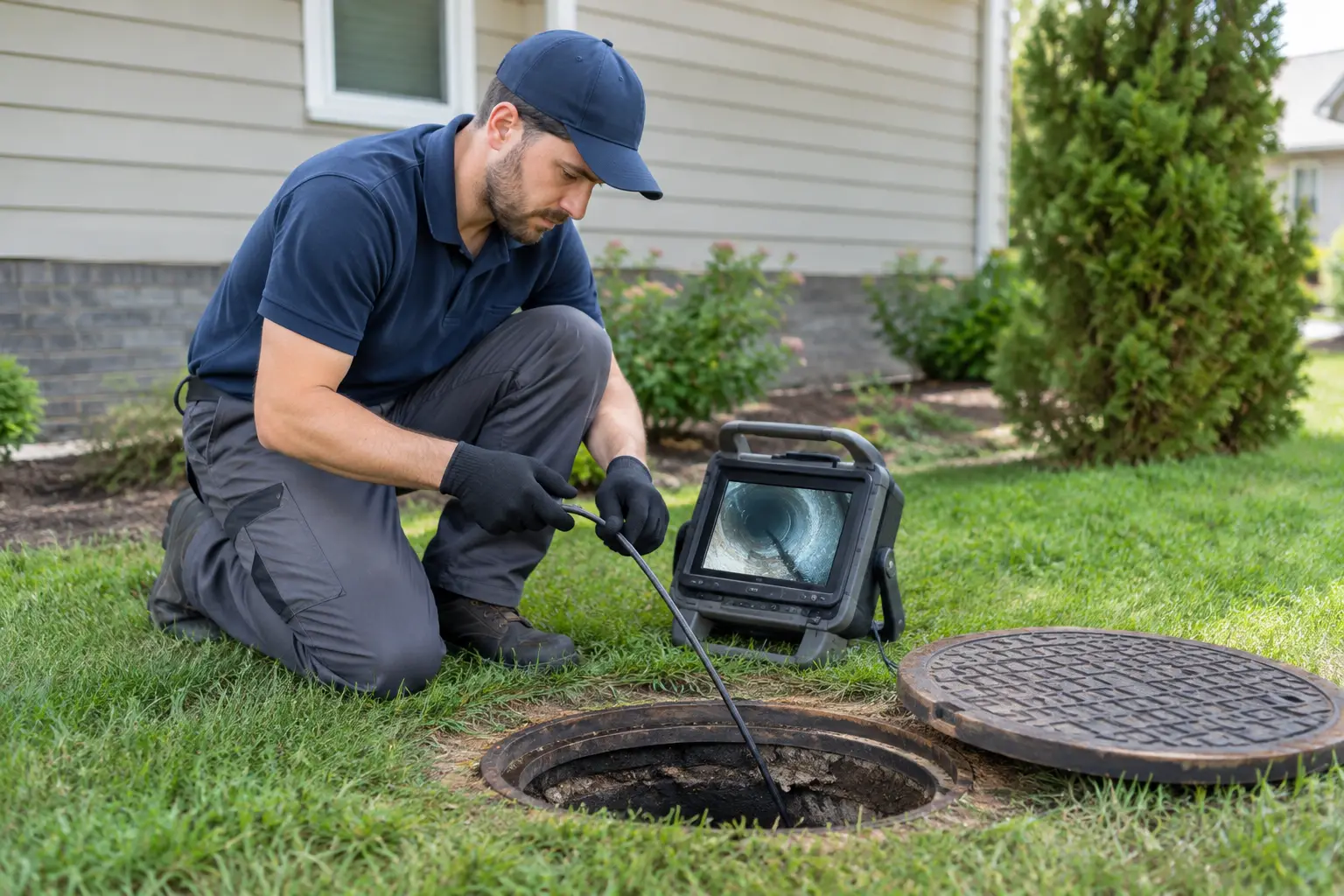
A professional sewer video inspection gives you a clear look inside the drain line without digging up the yard first. A technician typically accesses the line through a cleanout, which is a capped pipe designed for service access. If no usable cleanout is available, the technician will determine the safest practical access point.
A small waterproof camera travels through the line on a flexible cable. Its live video shows the pipe’s interior, including buildup, roots, separated joints, cracks, bellies, and obstructions. The technician can also locate where a concern sits in the line, which is essential if repair or replacement becomes necessary.
The inspection is not just about finding a clog. It helps distinguish between a blockage that may be cleared and a pipe condition that needs a more lasting repair. For example, roots can often be removed from a line, but a badly broken joint will continue admitting roots until the pipe is repaired. Likewise, heavy grease or scale may respond to professional cleaning, while a collapsed section cannot be solved with drain cleaner or repeated snaking.
Camera visibility depends on the condition of the line. If the pipe is completely full of standing water or debris, the line may need to be cleared enough for the camera to pass and produce useful footage. That is one reason a proper diagnosis sometimes includes both drain clearing and video inspection.
What Your Camera Results Can Reveal
A video inspection commonly finds one of several conditions. Root intrusion is a frequent concern around mature landscaping. Roots naturally seek moisture and can enter through tiny openings at joints or cracks. Once inside, they collect paper and debris until flow becomes restricted.
Another common finding is buildup. Grease, soap residue, mineral deposits, and paper products can narrow the inside of a pipe over time. This is different from a broken line, and the right response may be thorough cleaning rather than excavation. The camera helps avoid treating every drainage issue like a replacement project.
Technicians also look for bellies, which are low spots where a pipe has settled and holds water. A minor belly may be monitored if the line still flows well. A deeper low spot that repeatedly collects debris may need repair. Cracks, offsets, and collapsed sections are more urgent because they can worsen, allow soil into the pipe, or cause repeated backups.
The key question is not simply, “Is there a problem?” It is, “What is the condition, where is it located, and what repair gives the home the most reliable result?” A clear explanation and straightforward upfront pricing should come before work begins, so you can make the decision with the facts in hand.
Sewer Inspection Before Buying or Remodeling
A home inspection is valuable, but it usually does not include a detailed view of the underground sewer line. For buyers considering an older property, a separate sewer camera inspection can reveal costly conditions that are otherwise hidden. This is particularly useful when the home has large established trees, an older sewer connection, or no record of recent line work.
A sewer inspection can also make sense before finishing a basement, adding a bathroom, or planning major landscaping. A backup after a basement renovation can damage flooring, walls, and belongings. Knowing the sewer line’s condition before investing in the space provides a better basis for planning.
If the property uses a septic system, the underground drain line from the home can still be inspected, but the evaluation of the septic tank and leach field is a separate service. Be clear about which part of the wastewater system is being assessed so there are no gaps in the evaluation.
What Homeowners Should and Should Not Do
If you suspect a main sewer issue, stop using as much water as possible until the cause is identified. Keep children and pets away from any wastewater, and avoid trying to clear a serious backup with chemical drain cleaners. These products may not reach the blockage, can damage certain pipes, and can create a safety hazard for anyone servicing the line afterward.
You can make the appointment more productive by noting which fixtures are affected, when the symptoms began, and whether the issue follows laundry, showers, or heavy rain. If you know where the sewer cleanout is located, clear reasonable access around it. Do not force open a cap if it appears damaged, pressurized, or difficult to remove.
Regular habits can reduce avoidable clogs. Keep wipes, paper towels, hygiene products, and cooking grease out of drains and toilets. Even products labeled “flushable” do not break down like toilet paper and can catch on roots, scale, or rough pipe interiors. Good habits help, but they cannot correct an aging or damaged sewer line, which is why recurring symptoms deserve a professional look.
Choosing the Right Next Step
The best repair depends on what the camera finds. A soft blockage or buildup may need professional drain cleaning. Root intrusion may call for root removal followed by repair of the entry point if the pipe is damaged. A localized crack or offset might be repaired in one area, while widespread deterioration may make replacement the better long-term choice.
There is a trade-off between the least expensive immediate fix and the repair that prevents repeated service calls. A dependable plumbing professional should explain both options plainly, including what each approach addresses and what it does not. Escape Plumbing & Heating uses modern sewer video inspection to help homeowners see the issue clearly and move forward without delays or pricing surprises.
A sewer inspection is not an alarm to panic. It is a practical way to replace uncertainty with evidence before a small drainage warning becomes a disruption to your home.